 By Yuval Strutti
Some videos make people stop scrolling without even realizing why. That is the power of business video done right: not just selling a product, but building a brand people remember.
With social platforms prioritizing video, brands that tell authentic stories now outperform polished-but-generic campaigns. People connect with what feels human.
What you will learn: the most effective business video types, real campaign examples, practical lessons to apply, and how to create authentic high-performing videos faster.
The Main Types of Business Videos
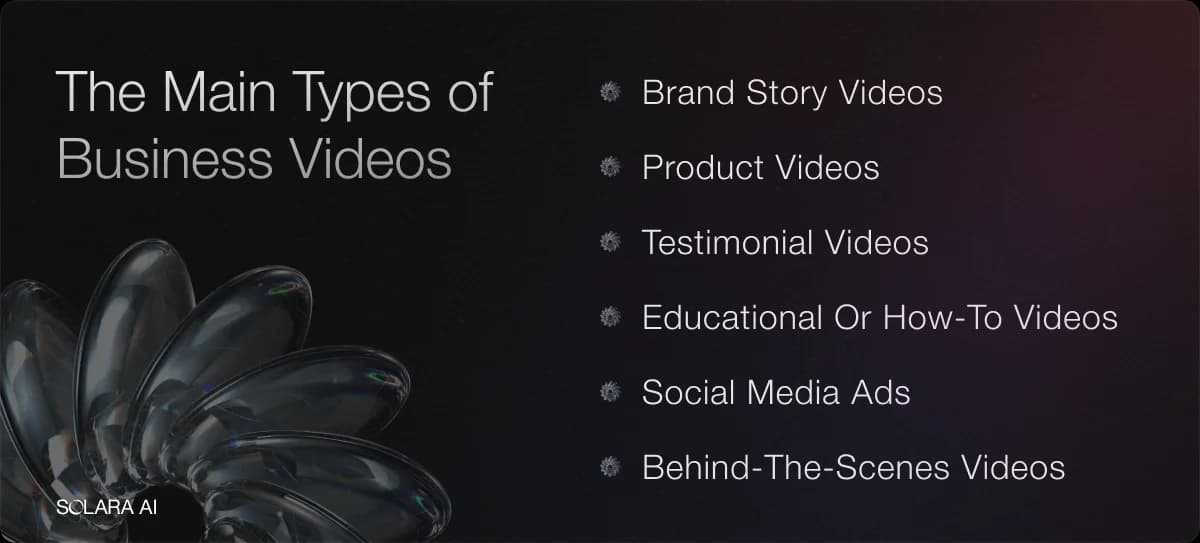
Different goals need different formats. Great brands mix these video styles so their message stays fresh while still feeling consistent.
Video remains one of the strongest conversion levers in marketing, with 82% of consumers saying a video convinced them to buy.
- Brand story videos: show who you are, why you exist, and what you stand for.
- Product videos: show how the product works and why it matters in seconds.
- Testimonial videos: build trust quickly with real customer proof.
- Educational/how-to videos: teach first, sell second, and build authority.
- Social media ads: fast, native-feeling clips that hook attention immediately.
- Behind-the-scenes videos: show real people and real process to make your brand human.
8 Real Business Video Examples and Why They Work
Example 1: Solara AI - Making Marketing Feel Effortless
Solara AI frames automation through outcomes, not dashboards. Instead of technical explanations, the story focuses on time saved, campaign improvement, and a calmer marketing workflow.
Why it works
- Focuses on outcomes instead of feature overload.
- Uses simple, relatable storytelling.
- Makes automation feel supportive and human.
- Looks polished without feeling cold.
What to learn
The strongest videos show how your product changes someone’s day, not just what buttons it has.
Example 2: Apple - Relax, It’s iPhone
Apple captures one universal moment: dropping your phone. The tension and instant relief deliver the message with almost no explanation.
Why it works
- Universal scenario people immediately recognize.
- Emotional arc in seconds (panic to calm).
- Clean visual style aligned with brand identity.
- Shows value through lived experience.
What to learn
One honest, familiar moment can outperform a complex high-budget narrative.
Example 3: The Original Tamale Company - Viral AI Meme Video
A small family business produced a humorous meme-style ad in around ten minutes using AI, and it reached more than 22 million views.
Why it works
- Feels spontaneous and highly shareable.
- Uses platform-native humor and pacing.
- Delivers surprise, emotion, and product craving quickly.
- Proves small brands can create high-impact creative fast.
What to learn
Personality beats perfection. Entertainment value plus timing can outperform expensive production.
Pro tip: AI systems that learn your tone and product style make it easier to scale authentic UGC-like content without a full production team.
Example 4: Gymshark - United We Sweat
Gymshark builds campaigns around real community members and creators, not polished actors. The result is content that feels lived-in and credible.
Why it works
- Community-first storytelling.
- Participation over perfection.
- Built-in organic distribution through participants.
- Strong authenticity signal.
What to learn
Let customers become storytellers and your brand message spreads with higher trust.
Example 5: Slack - Caraway Brings All the Right Ingredients Together
Slack uses a customer story format that starts with real team workflows, then naturally shows where Slack improves coordination.
Why it works
- Real employees, not actors.
- Product shown in natural use.
- Outcome-focused messaging over hard selling.
- Tone and visuals match Slack’s brand personality.
What to learn
Open with a relatable work story and let the product appear as the enabler.
Example 6: BlendJet - Blend Anywhere Campaign
BlendJet combines creator-style footage and lifestyle moments to position its product as portable, fun, and everyday.
Why it works
- Real-life usage contexts.
- Visually magnetic scenes and color.
- Lifestyle positioning, not feature dumping.
- Creator authenticity and social proof.
What to learn
Show your product in real moments people want to imagine themselves in.
Example 7: Canva - Magic Studio Launch
Canva demonstrates AI capability through practical workflows instead of feature narration, making advanced tools feel effortless.
Why it works
- Shows tasks and outcomes clearly.
- Editing rhythm mirrors simplicity and ease.
- Empowerment positioning: anyone can create.
- Strong emotional clarity with minimal narration.
What to learn
Teach by showing. When people can picture themselves using the tool, adoption rises.
Example 8: Patagonia - What’s Next Campaign
Patagonia leads with mission and values, using real voices to build trust without pushing products directly.
Why it works
- Values-first storytelling.
- Credibility through real people and partners.
- Grounded visual tone aligned with brand ethos.
- Authentic moments over overproduced polish.
What to learn
When the belief is genuine, the message has staying power.
Create Videos That Feel Real with Solara AI
More than half of marketers already use AI to create or edit video. The practical advantage now is not whether you use AI, but how quickly you can turn ideas into authentic stories and keep improving with performance feedback.
- Keeps your brand voice consistent across campaigns.
- Turns content creation into a full distribution strategy.
- Tracks results in one place so winning patterns are obvious.
- Improves output quality over time as the system learns.
If these examples sparked ideas, the next move is execution speed. The brands that publish authentic video consistently are the ones compounding results.