
 By Yuval Strutti
If you are searching for hootsuite alternatives in 2026, you are not alone: teams now expect social media management tools to handle planning, creation, publishing, engagement, and performance optimization without forcing a patchwork stack.
This guide benchmarks 10 leading hootsuite competitors and social media management tools using the criteria that matter most right now: publishing reliability, AI workflow depth, analytics quality, and real cost as your team scales.
Why Teams Search for Hootsuite Alternatives in 2026
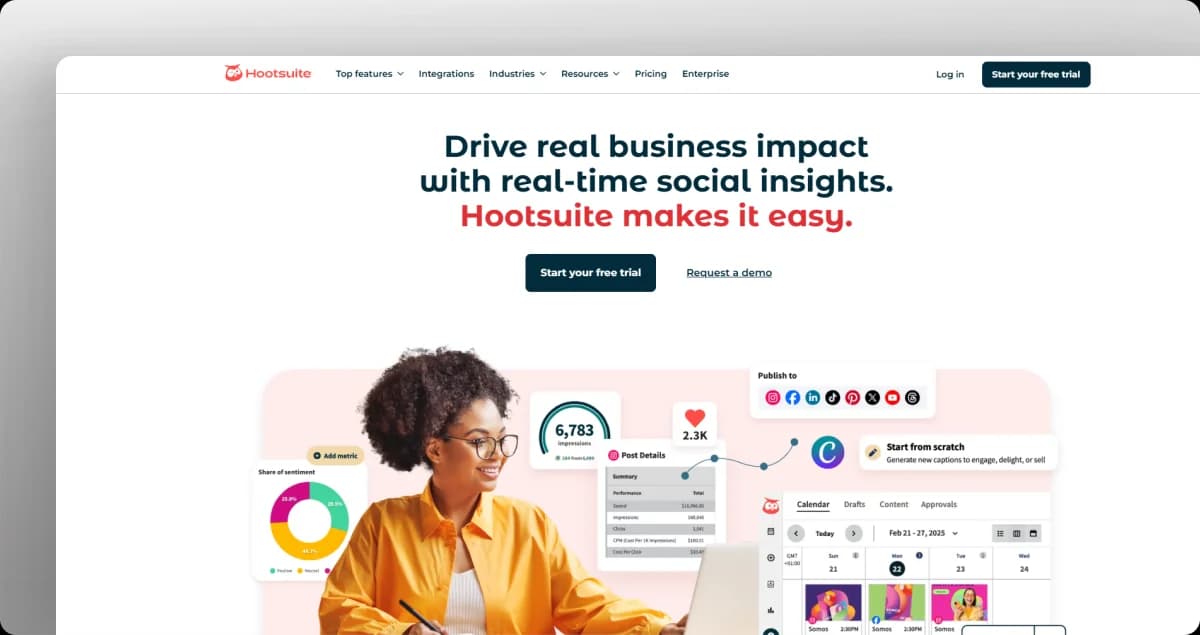
Hootsuite remains a recognizable enterprise platform, but most SMB and mid-market teams evaluate alternatives for three recurring reasons: seat-based cost growth, workflow friction, and the need for deeper AI support across content and campaign execution.
Hootsuite capabilities teams still value
- Multi-network scheduling and publishing
- Social listening and mention monitoring
- Performance analytics and benchmarking
- AI writing support for captions and drafts
- Paid and organic campaign coordination
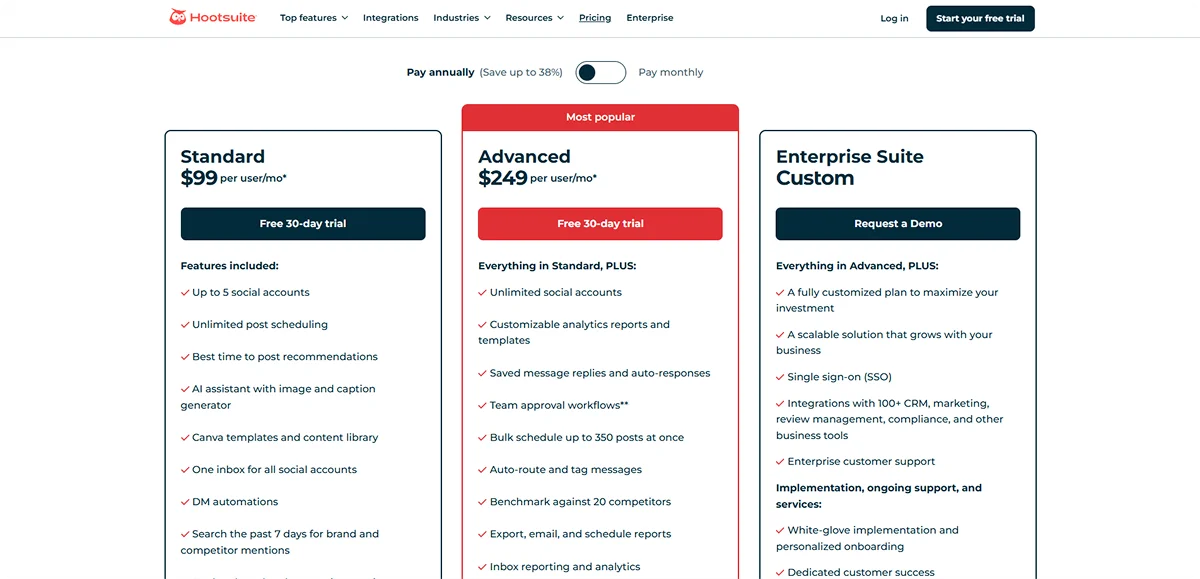
On Hootsuite's official plans page, packaging is now centered on Standard, Advanced, and Enterprise tiers with seat-based billing and regional pricing. In practice, teams compare total annual cost rather than just entry-level monthly pricing because collaboration, approvals, and advanced reporting usually drive upgrades.
What high-performing teams want from hootsuite alternatives: faster execution, stronger AI copilots, cleaner collaboration, and a better pricing-to-output ratio as channels and stakeholders increase.
What Top-Ranking Hootsuite Competitor Pages Do Better
Reviewing current top-ranking pages for this keyword (including Buffer, SocialPilot, Sprout Social, and Planable) shows a clear pattern: they open with pricing context, include a quick comparison section, and make recommendations by use case rather than pushing one-size-fits-all picks.
- Clear, above-the-fold comparison framing for best hootsuite alternatives 2026
- Per-tool sections with pricing, best-for fit, and practical trade-offs
- Decision support by team type (creator, brand, agency, enterprise)
- Strong internal linking to related social strategy and AI workflow content
- A conclusion that repeats target intent: choose the right hootsuite competitor for your operating model
We use the same structure below, then add a stronger AI-operations lens so you can choose based on real workflow outcomes, not feature checklist inflation.
10 Hootsuite Alternatives to Evaluate Now
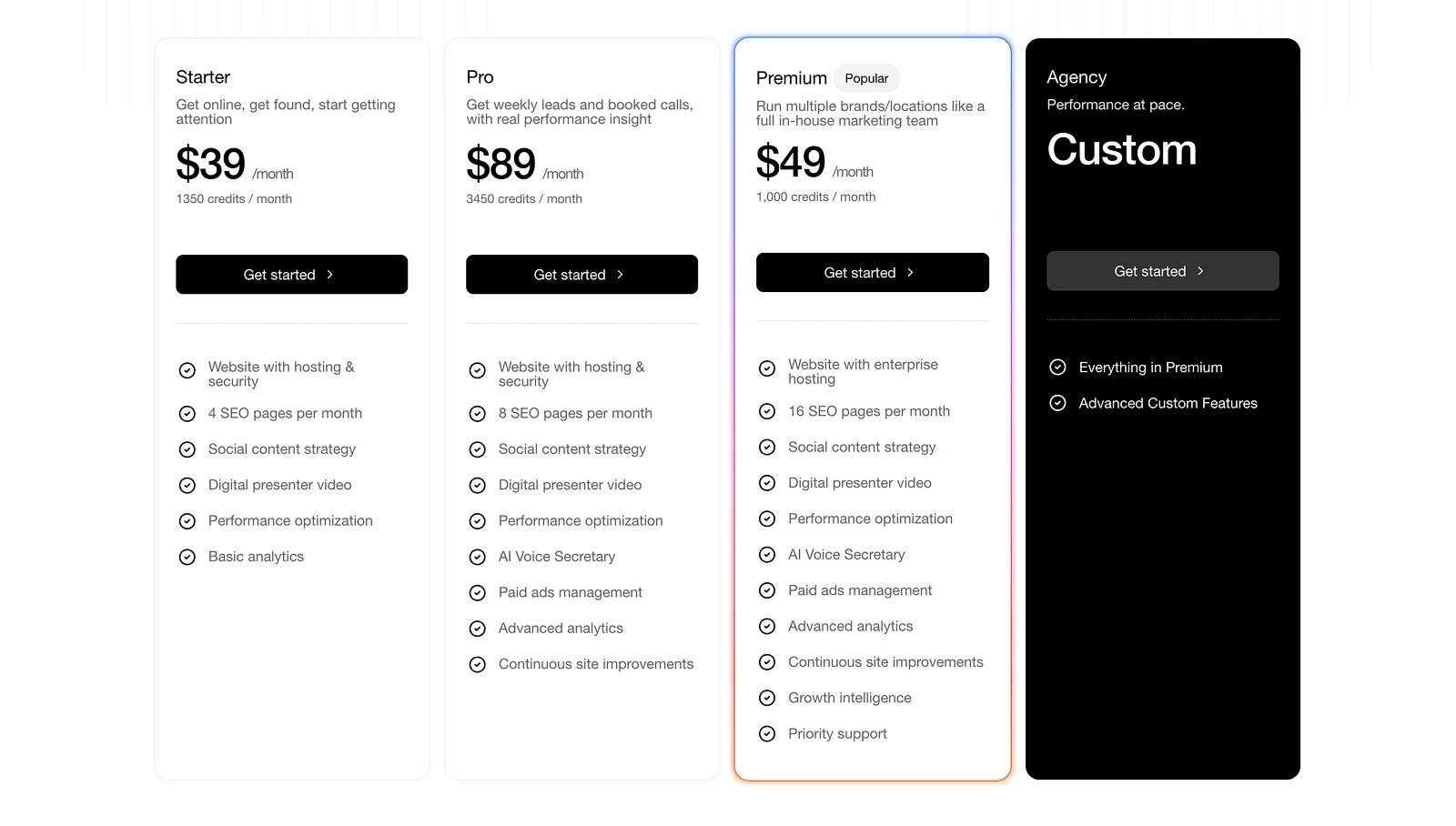
1. Solara AI
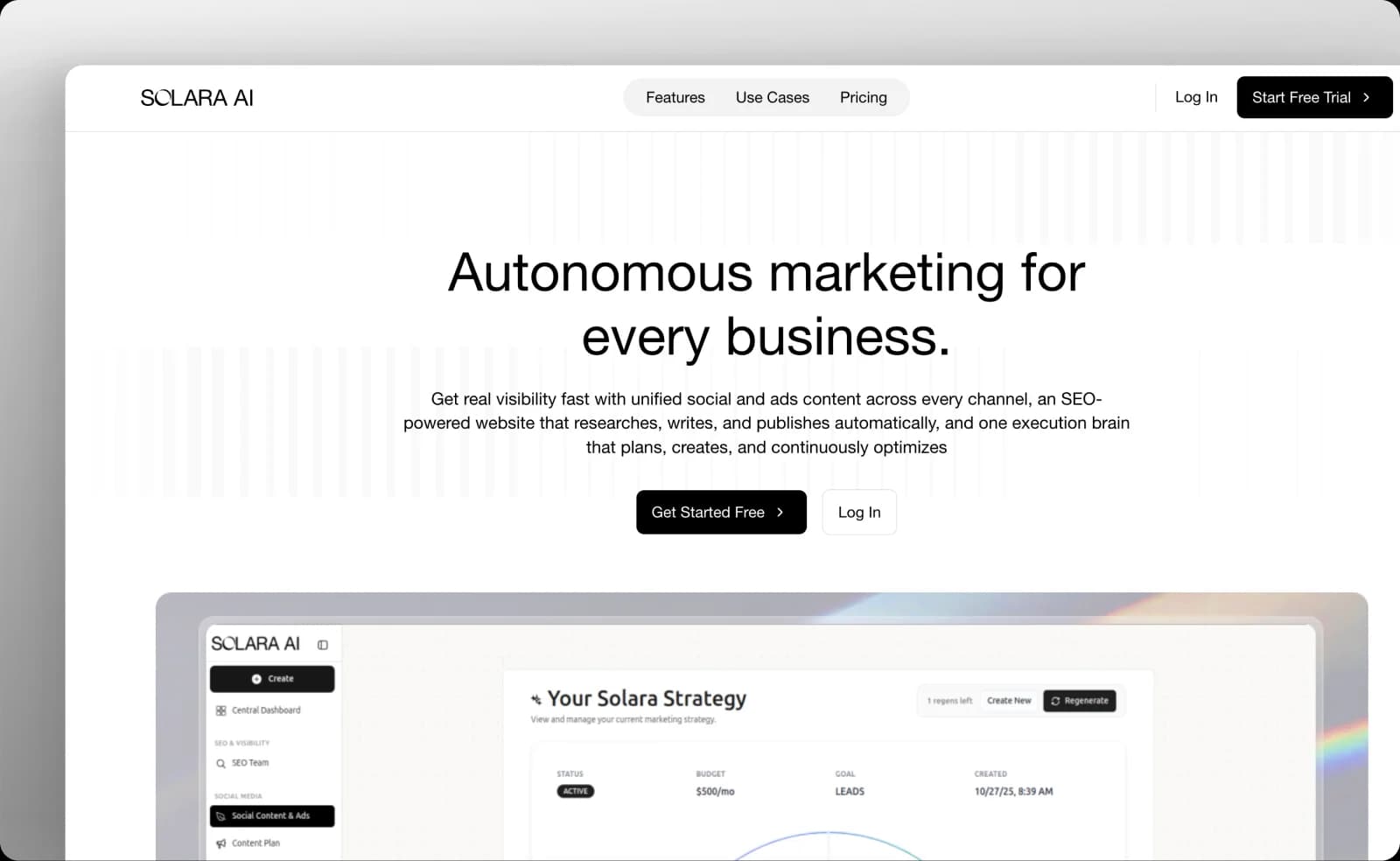
Solara AI is for teams whose scheduling queue keeps running dry because nobody has time to make the video. It writes the scripts, texts them to you, edits the two minutes you film back, and publishes the result to TikTok, Instagram and Facebook — so there is no queue to fill.
Key features
- Weekly scripts written for you and sent by text
- Two minutes of phone footage becomes a finished video
- Six editing passes on every clip you send
- Published on your schedule — you post nothing yourself
- One plan, no add-ons and no per-post fees
Pricing: $29/month, or $290/year
2. StoryChief
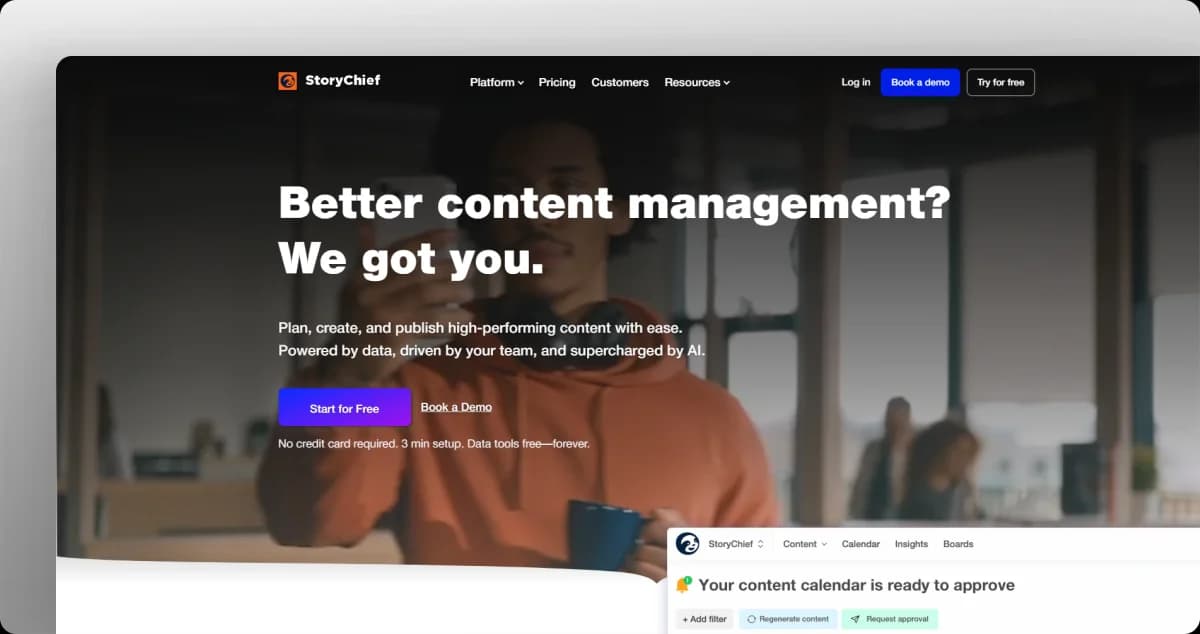
StoryChief combines social scheduling with editorial planning and SEO workflows, making it a strong fit for content-led teams that publish across blogs, newsletters, and social channels from one workspace.
Key features
- Cross-channel publishing from one interface
- Real-time collaboration and approval workflow
- Built-in SEO + GEO recommendations and readability checks
- Calendar-driven editorial planning
- Analytics and reporting across channels
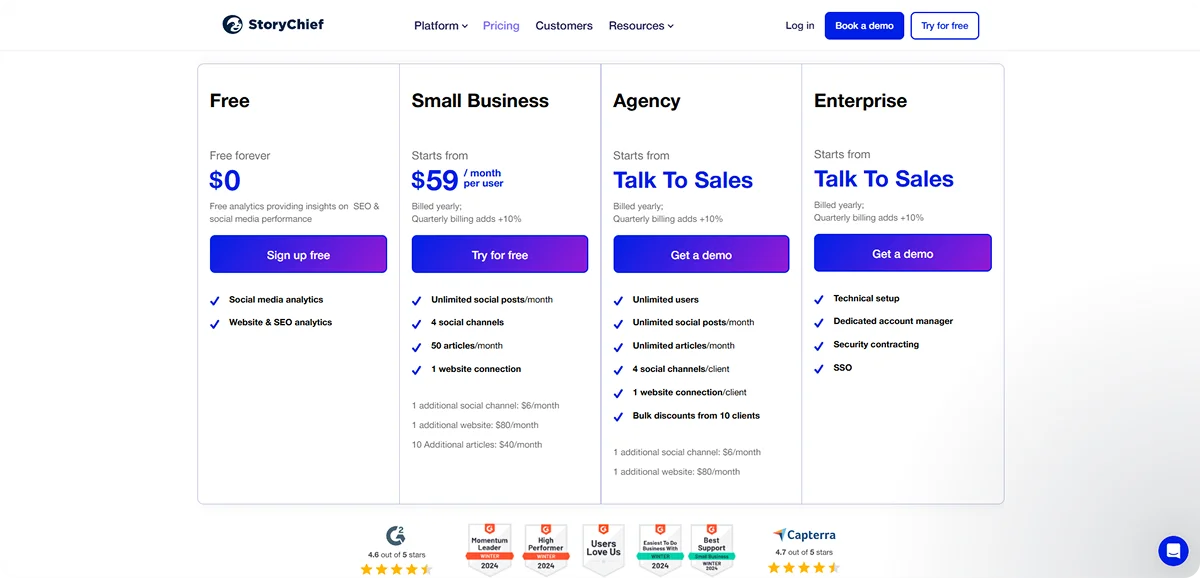
Pricing: Free plan; paid plans from €19/mo
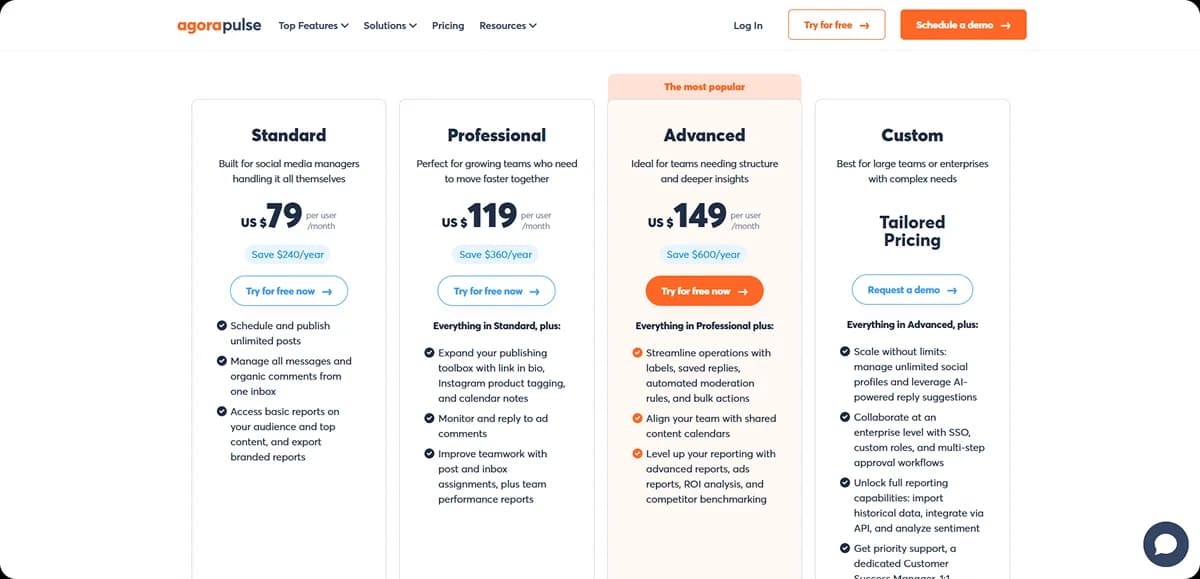
3. Agorapulse
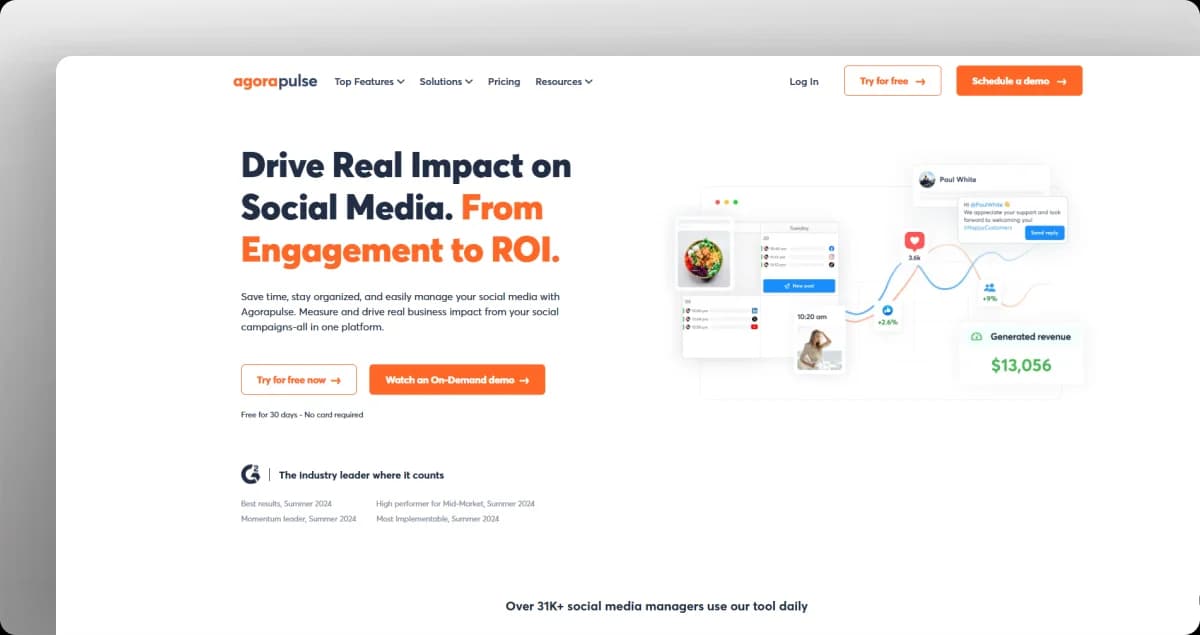
Agorapulse is one of the most mature hootsuite competitors for teams that prioritize inbox operations and reporting, with strong moderation workflows and collaboration controls.
Key features
- Unified social inbox
- Visual scheduling calendar
- Social ROI tracking with GA/GA4 integration
- Collaboration and task assignment
- Performance dashboards and white-label reporting
Pricing: From $79/user/mo (annual billing)
4. ContentStudio
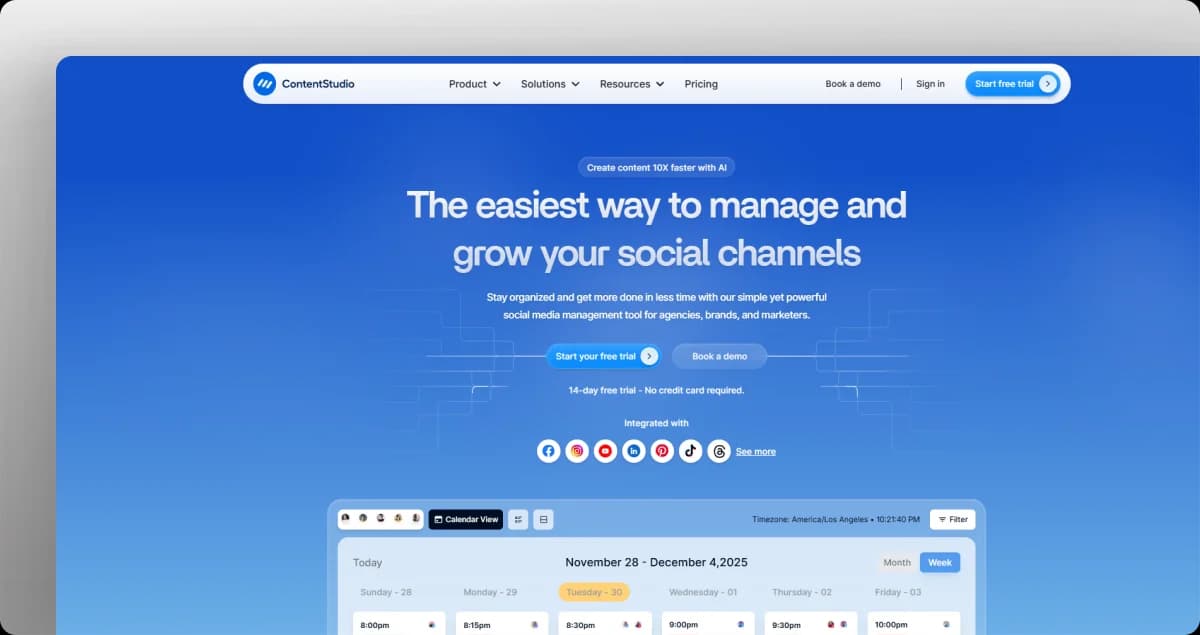
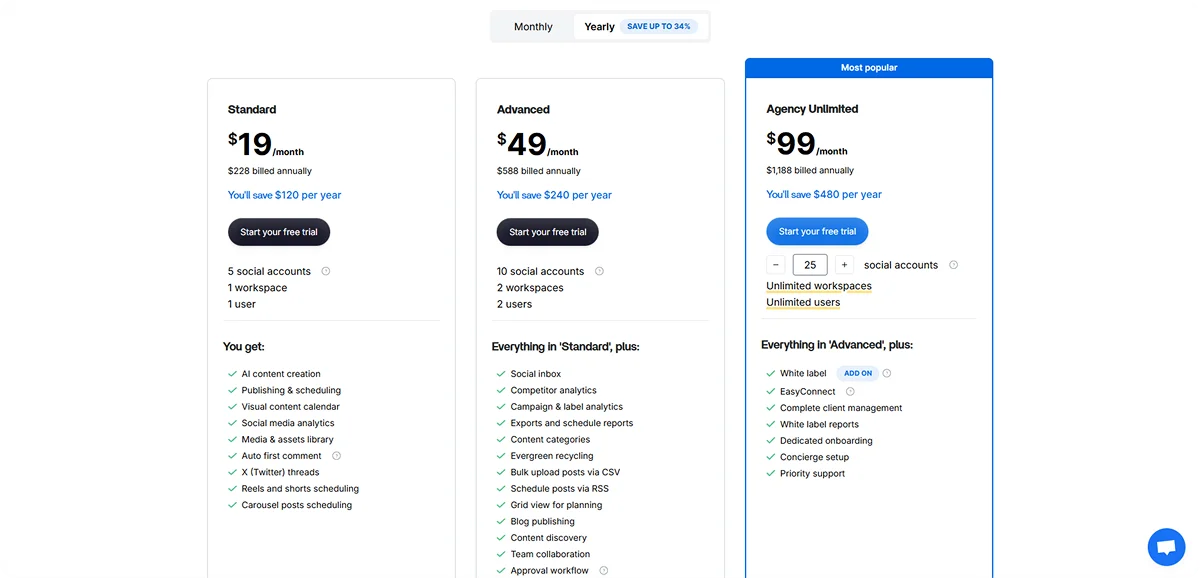
ContentStudio is a practical choice for agencies and SMB teams that want affordable scheduling, curation, and AI-assisted creation with clear workspace controls.
Key features
- Multi-channel scheduling and drip-feed publishing
- Trend discovery and topic suggestion
- SEO optimization support and website analytics
- Team approval workflows
- White-label reporting options
Pricing: From $19/mo
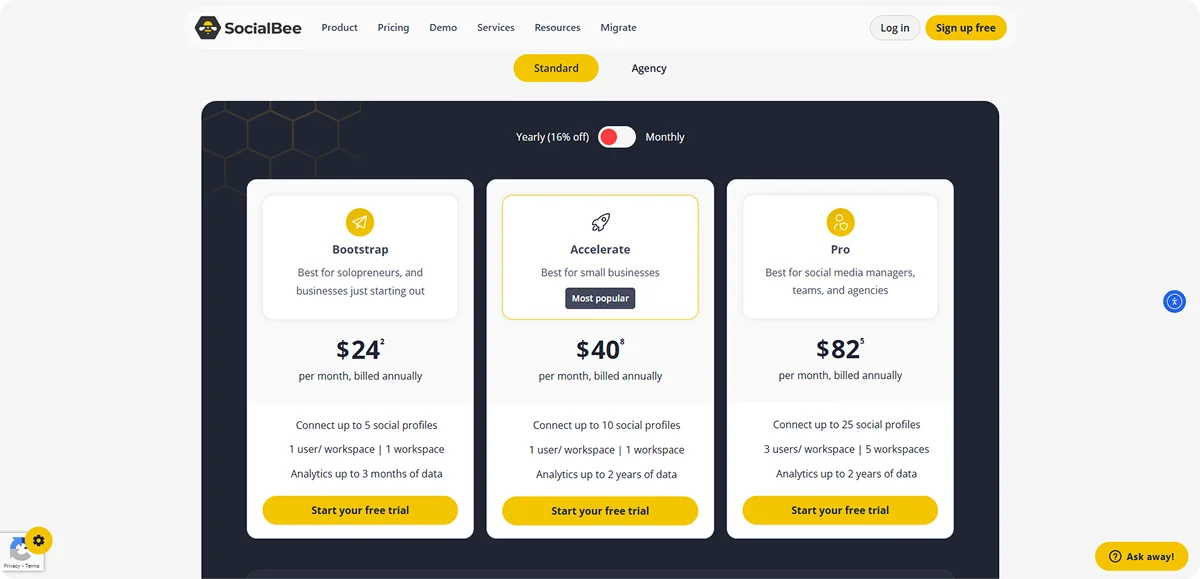
5. SocialBee
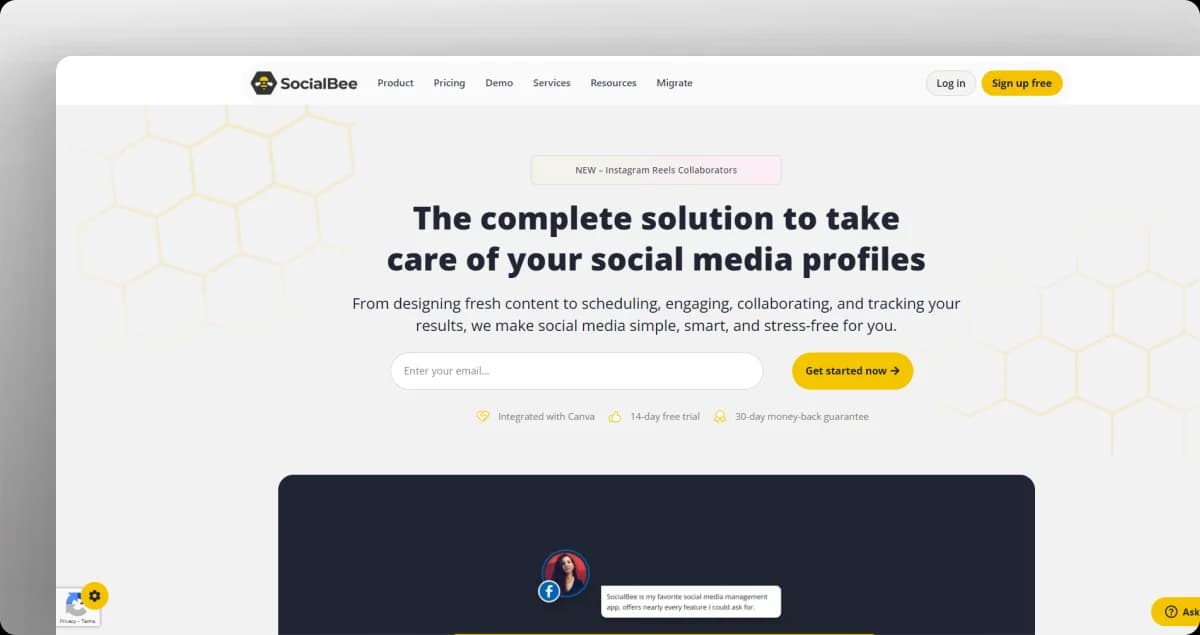
SocialBee is a strong fit for teams that depend on category-based publishing, evergreen recycling, and straightforward social workflow automation.
Key features
- Visual planning calendar
- AI copilot for strategy prompts, captions, and posting recommendations
- Multi-platform and universal posting
- Content categorization and queueing
- Analytics and collaboration controls
Pricing: From $29/mo (or $24.2/mo billed annually)
6. Oktopost
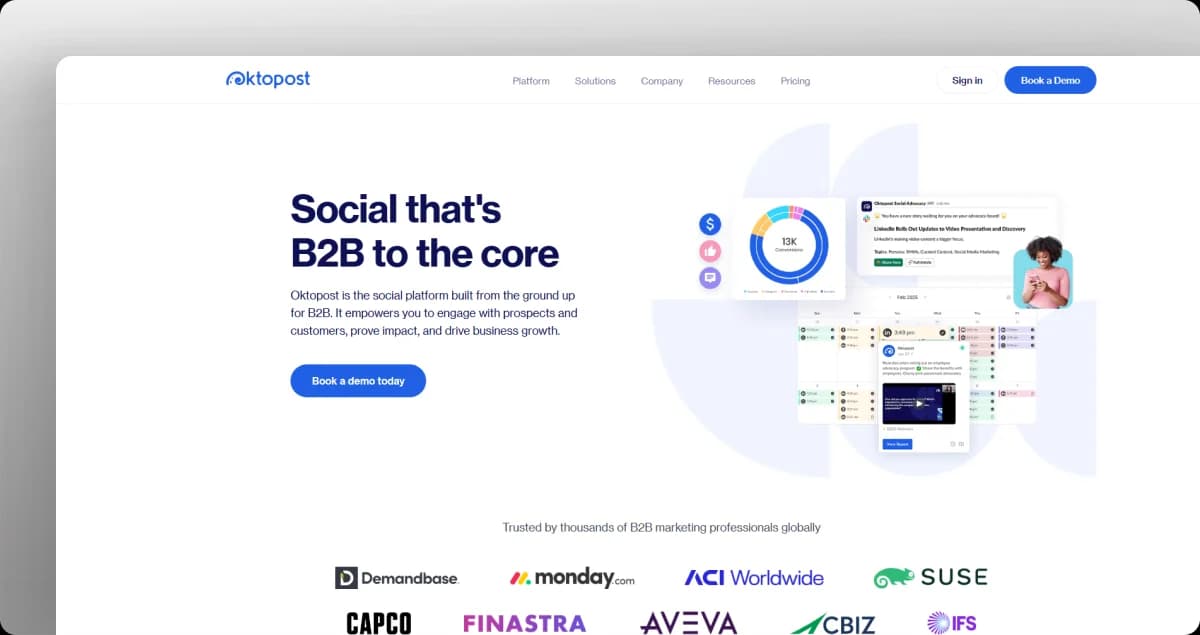
Oktopost is designed for B2B organizations that need stronger revenue attribution and employee advocacy workflows, especially for LinkedIn-led demand generation.
Key features
- LinkedIn-first publishing and engagement workflows
- Pipeline and revenue-oriented analytics
- Social listening and competitor monitoring
- CRM-connected attribution
- B2B-focused campaign operations
Pricing: Custom pricing (packages start around $8K/year)
7. Copy.ai
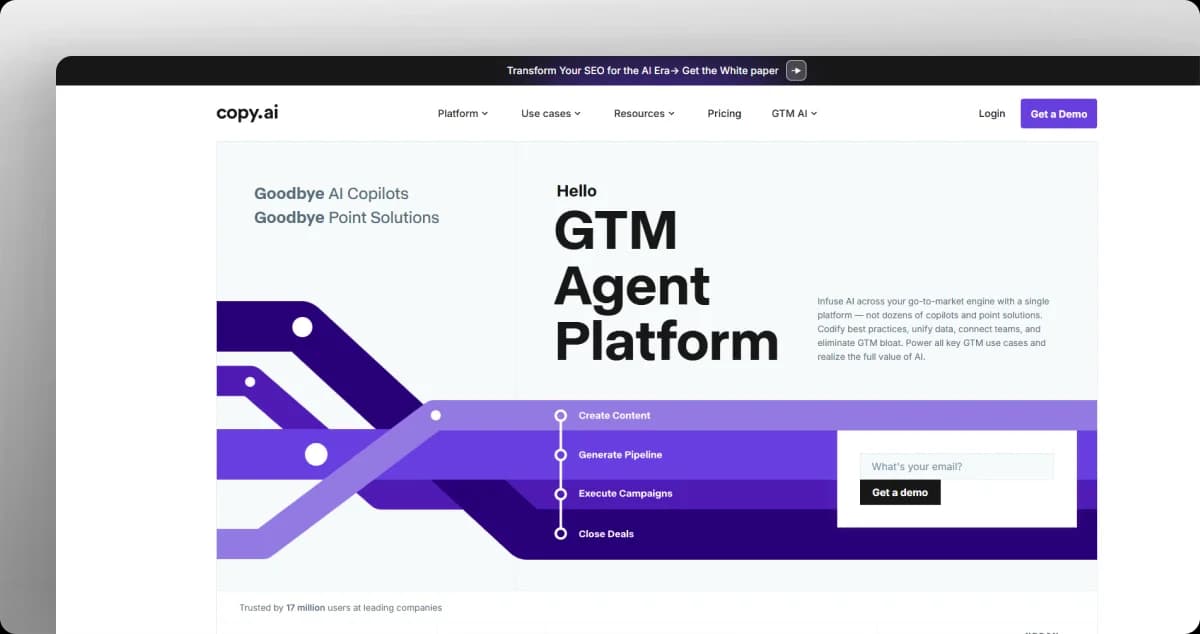
Copy.ai is not a full social scheduler, but it is a strong AI workflow layer for teams that need repeatable copy operations across campaigns, outreach, and content production.
Key features
- High-volume AI content generation
- Brand voice and infobase configuration
- SEO-oriented article and campaign drafting
- Workflow automation for GTM and content operations
- Cross-team collaboration
Pricing: From $29/mo (Chat); GTM plans from $1,000/mo
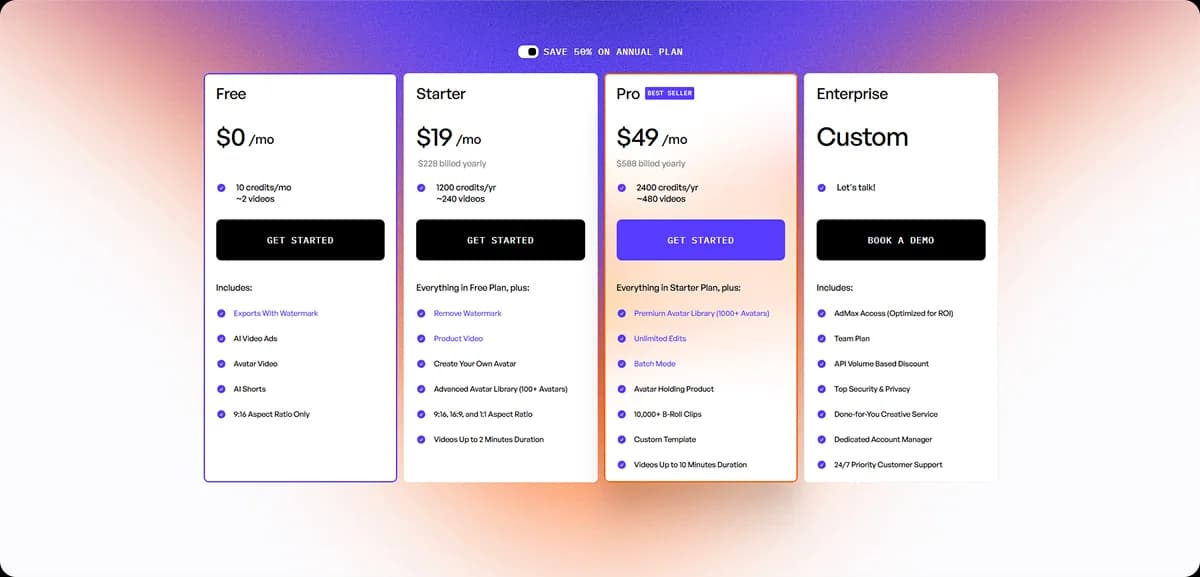
8. Creatify.ai
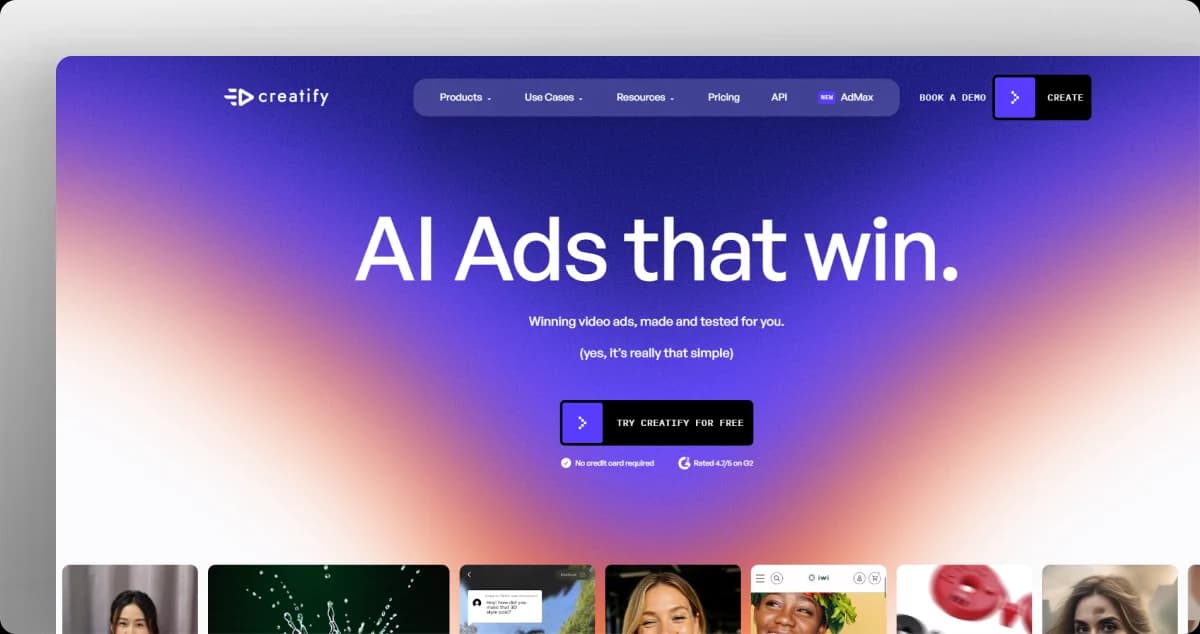
Creatify.ai helps performance teams turn product pages and scripts into fast ad-ready videos, useful when creative throughput is your bottleneck.
Key features
- Product URL to video ad conversion
- AI avatar presenter options
- Multilingual text-to-speech voiceovers
- Batch variation capability
- Quick ad-format exports
Pricing: Free plan; paid plans from $19/mo
9. Writesonic
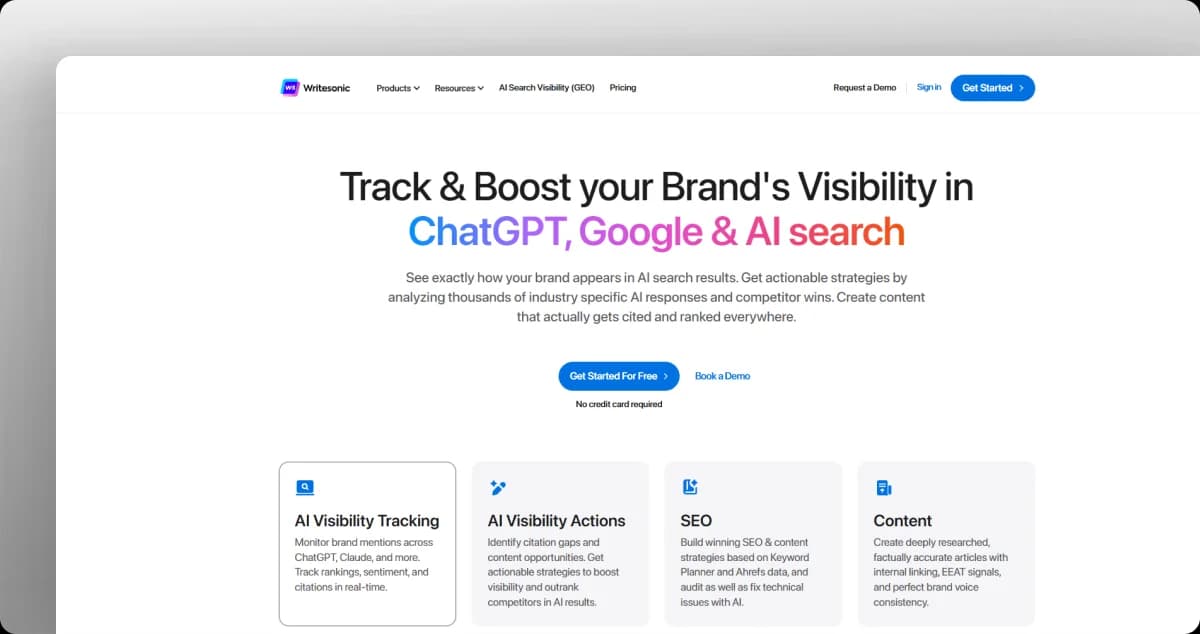
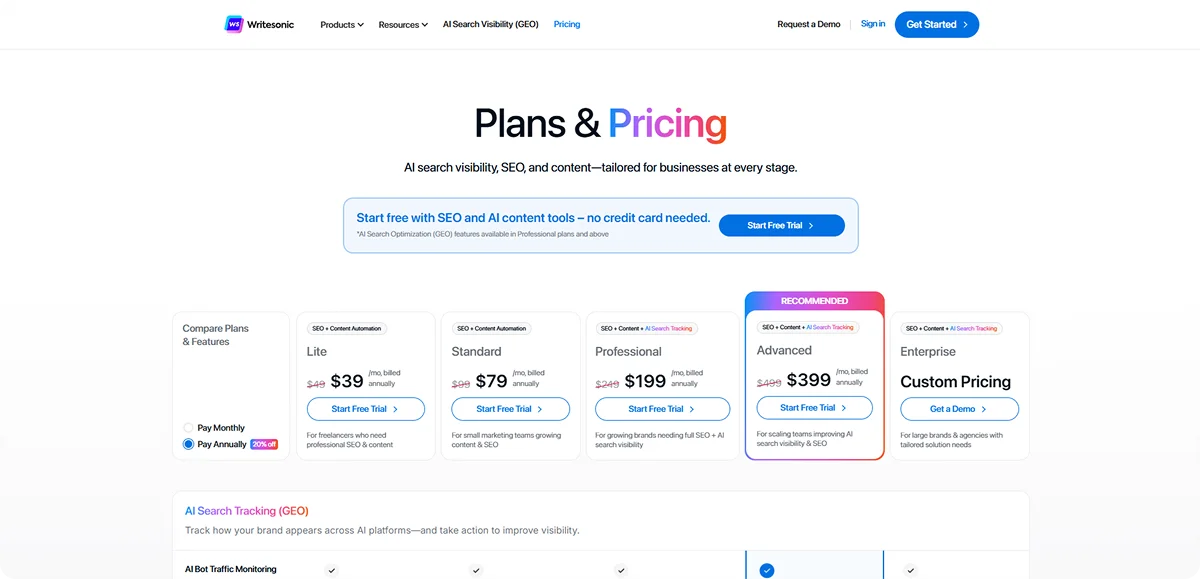
Writesonic is best for content and SEO-heavy teams that want integrated writing, optimization, and AI search visibility workflows in one platform.
Key features
- Long-form SEO article generation and content optimization
- AI search visibility tracking (GEO)
- Integrated keyword and strategy tooling
- Site audit and automated optimization workflows
- Marketing assistant for planning and execution
Pricing: From $49/mo
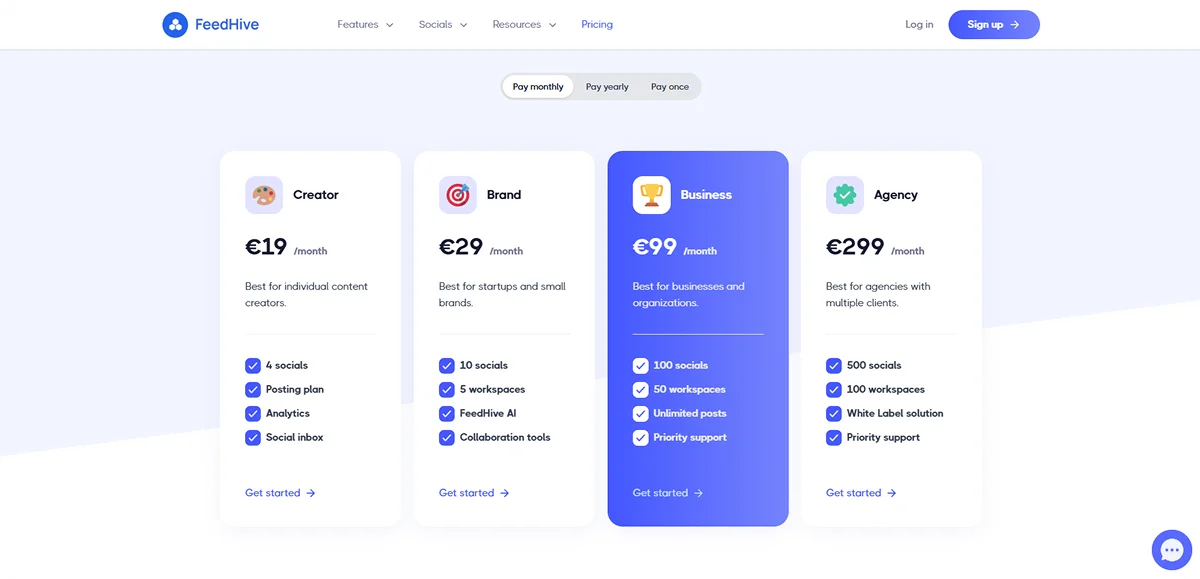
10. FeedHive
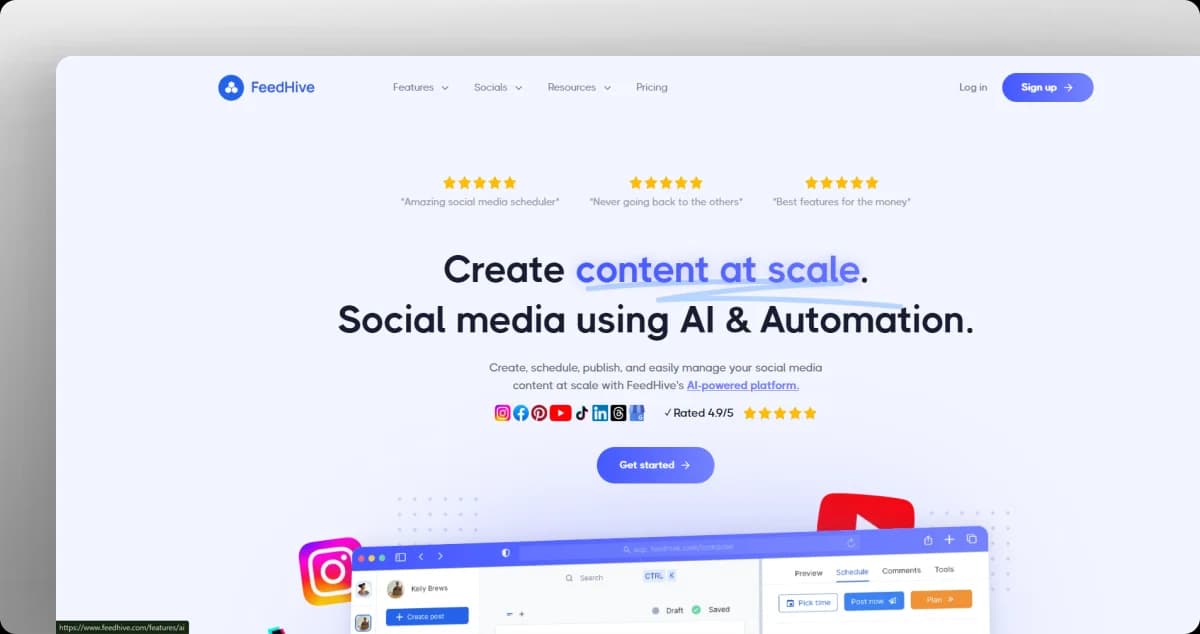
FeedHive is a lightweight but capable option for creator brands and smaller teams that want AI assistance, automations, and a clean planning experience.
Key features
- AI content and hashtag suggestions
- Smart scheduling with performance prediction
- Central social inbox
- Drag-and-drop visual calendar
- Approval workflows and analytics
Pricing: From €19/mo
Side-by-Side View of Hootsuite Competitors
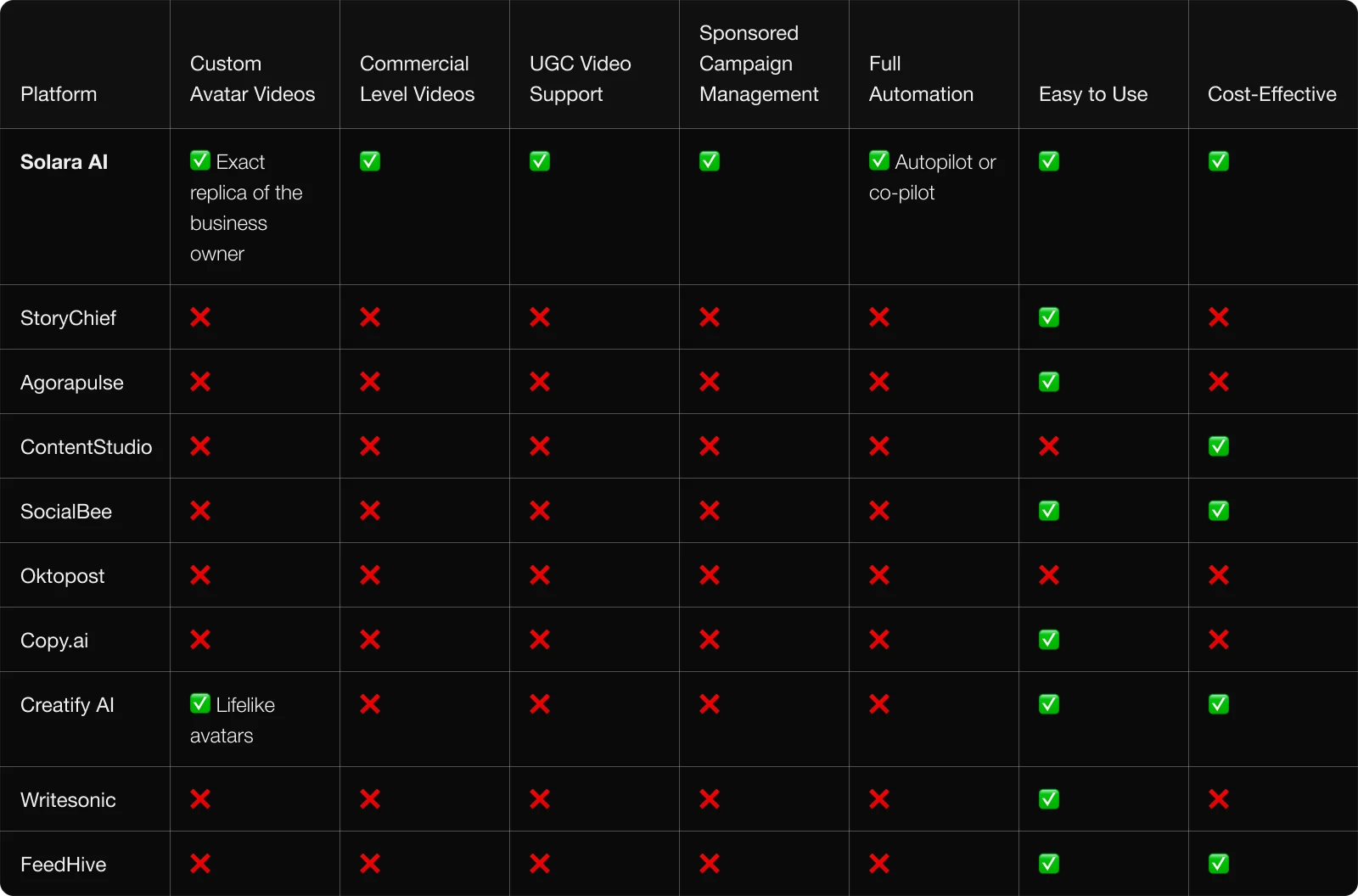
Most hootsuite alternatives overlap on scheduling, but they diverge fast on operational depth. If your team evaluates tools only on post composer UX, you will likely miss the more expensive bottleneck: cross-functional execution between strategy, content, approvals, paid distribution, and reporting.
For price-sensitive teams, ContentStudio, SocialBee, and FeedHive are usually the fastest path to improving output-per-dollar. They deliver strong baseline scheduling, useful AI assistance, and enough collaboration controls for lean teams. The trade-off is that advanced attribution and complex governance often require either add-ons or eventual migration.
For agency operations, StoryChief and Agorapulse tend to win because they reduce handoff drag. Both support tighter approvals, client-facing reporting, and multi-channel workflows that are easier to standardize across accounts. If your agency margin is under pressure, workflow consistency matters as much as pricing because rework kills utilization.
For B2B organizations where LinkedIn and pipeline contribution are central, Oktopost remains one of the strongest options. Its CRM-connected analytics model is a better fit for revenue teams that need to map social touches to demand generation outcomes rather than just engagement totals.
For AI-heavy content velocity, Copy.ai and Writesonic can be used as force multipliers even if they are not your final publishing hub. Teams often pair these platforms with a scheduler, but this introduces orchestration overhead. That is exactly why many brands now prefer an integrated operating layer where creation + distribution + optimization are connected.
Why best hootsuite alternatives 2026 increasingly prioritize AI
According to Sprout Social's 2026 industry commentary, 93% of social practitioners agree that content must keep up with fast-moving online trends and culture. This is not just a creative pressure point—it is an operations problem. Teams that still depend on manual drafting, fragmented approvals, and disconnected analytics struggle to maintain both speed and quality.
- If your core pain is execution speed, prioritize workflow automation over extra dashboards.
- If your core pain is proving value, prioritize attribution and report clarity over publishing extras.
- If your core pain is creative throughput, prioritize AI variation and reuse systems over one-off ideation.
- If your core pain is governance, prioritize role permissions, approvals, and operational reliability.
The real winner among hootsuite competitors is the platform your team can run consistently every day without workflow debt. Reliability and clarity beat feature volume.
Best Hootsuite Alternatives 2026: Decision Framework
How to evaluate hootsuite competitors by workflow
Choose your platform based on the job your team does most: social publishing, engagement operations, creative production, B2B attribution, or autonomous AI execution. The wrong fit usually comes from buying for feature volume instead of workflow alignment.
Best hootsuite alternatives 2026 by team type
A practical way to de-risk your choice is to run a 14-day pilot with one real campaign, one approval flow, and one reporting cycle. Avoid sandbox testing only. You want to validate how the platform behaves when deadlines, stakeholder feedback, and performance iteration all happen at once.
- Creator or solo brand: FeedHive, SocialBee, or ContentStudio for lower-cost scheduling + AI support.
- Agency and client-service team: StoryChief, Agorapulse, or ContentStudio for approvals, reporting, and scale.
- B2B demand generation: Oktopost for LinkedIn + attribution depth.
- SEO-led social + content engine: Writesonic or StoryChief.
- Teams replacing tool chains with one AI execution layer: Solara AI.
During that pilot, track four KPIs only: time from brief to publish, percentage of posts approved on first pass, engagement or conversion lift on optimized content, and total weekly hours spent inside the tool by your team. This gives you a grounded benchmark to compare hootsuite alternatives without getting distracted by feature marketing.
For your long-term stack, plan around an AI-social operating model instead of disconnected point tools. Our AI marketing platform guide maps how to combine strategy, content, and optimization loops end to end.
If you are building your strategy now, pair this guide with our related deep dives on AI tools for social media content creation, AI marketing automation tools, and AI agents for marketing to shape a more resilient workflow roadmap.
If you are comparing switching options across multiple social and content tools, use our alternatives hub as the central hub for side-by-side evaluations and migration-oriented breakdowns.
The best hootsuite alternatives are the ones that remove operational drag. In 2026, teams win by choosing systems that shorten planning-to-publish time and continuously improve results, not just schedule more posts.