 By Yuval Strutti
Two questions come up constantly among people running social media for clients, and neither gets answered honestly very often.
Do I tell the client I'm using AI? And if it takes me a quarter of the time now, am I allowed to keep charging the same?
Short answers: yes, and yes. The longer answers are more useful.
Do you tell them?
Tell them. Not for moral reasons — for practical ones.
A client who finds out later feels deceived, whether or not the work was good. A client told upfront mostly does not care, and a surprising number are relieved, because it explains how you can do this at a price they can afford. The transparency costs you almost nothing and removes a live grenade from the relationship.
How you say it matters more than whether. This lands badly: "I use AI to write your posts." It sounds like the client is getting a machine instead of you.
This lands fine: "I use a system that handles the editing and scheduling, which is why I can turn round five videos a week instead of one. I write the angles, you're on camera, I approve everything before it goes out."
Same fact. The second version describes where the judgement lives, which is what they are paying for.
The pricing question
You are not selling hours. You were never selling hours, even when you were billing by them. The client is buying an outcome they cannot produce themselves, and the outcome has not got less valuable because your side got faster.
Cutting your price the moment delivery gets cheaper is the reflex, and it is how people end up working harder for less. The better move is to keep the rate and increase what lands — more video, faster turnaround, more clients carried at the same standard.
There is one exception worth taking seriously. If you sold a specific number of deliverables and you are now producing them in a tenth of the time, at some point a client will work that out. The fix is to change what you sell: stop quoting deliverables, quote outcomes and cadence. "Five published videos a week, every week" is a promise that stays honest whatever the production method.
Where AI genuinely fails on client work
This is the part that gets skipped in most write-ups, and it is the part that will actually cost you an account.
- It does not know what is true about the client's business. It will happily state a guarantee, a price or a qualification the client does not have. In a regulated trade that is not an embarrassment, it is a liability
- It does not know what happened locally last week. The reason a post lands is often something in the news, in the town, or in the client's own week. That has to come from you
- It has no taste about tone at bad moments. A scheduled cheerful post going out the day a client has a bereavement or a complaint going round the local group is the classic disaster, and it is always automation that causes it
- It writes competent, generic copy by default. Competent and generic is invisible. The line that makes someone stop is nearly always a specific, slightly odd, true detail that only the owner knows
- It cannot hold the relationship. The client stays because they trust you, not because the reel was cut well
Every one of those is an argument for keeping a person in the loop, not for avoiding the tools. The failure mode is not "AI is bad", it is "nobody looked before it went out".
A division of labour that holds up
The split that works is roughly this. The tool does anything that is production. You do anything that requires knowing something.
- Tool: cutting, captions, resizing per platform, scheduling, publishing, first-draft copy, repurposing one shoot into several pieces
- You: what the client should be saying this month and why, the specific true details, anything with a number or a claim in it, tone when something has happened, and the final look before it goes live
Keep a final human approval step even when it feels like overhead. It is the cheapest insurance in the business.
Is it allowed?
This comes up more in some markets than others — German freelancers in particular search a lot for whether earning money from AI-assisted work is permitted at all, which is a sensible instinct rather than a naive one.
The general position: using AI tools to produce client work is ordinary commercial practice, in the same way as using a stock library or an editing suite. What is not ordinary, and what you should get actual advice on rather than advice from a blog, is anything touching regulated claims, medical or financial content, likeness and voice rights when you are generating a person, and whatever your client contracts say about subcontracting and confidentiality.
Two practical habits cover most of it. Do not feed confidential client material into tools whose terms you have not read. And put a line in your contract stating that you use production tooling and retain editorial control — clients almost never query it, and it means the conversation happened.
What the good version looks like
The freelancers doing well right now are not the ones producing the most content. They are the ones who moved the expensive hours out of delivery and into the part clients actually value — knowing the business, deciding what to say, being reachable.
They carry more clients than the three-to-five a solo manager traditionally caps at, because each one costs them less time. They charge what they charged before. And they are taking the small local businesses that agencies price out at £800–2,500 a month, which is a large and almost entirely unserved market.
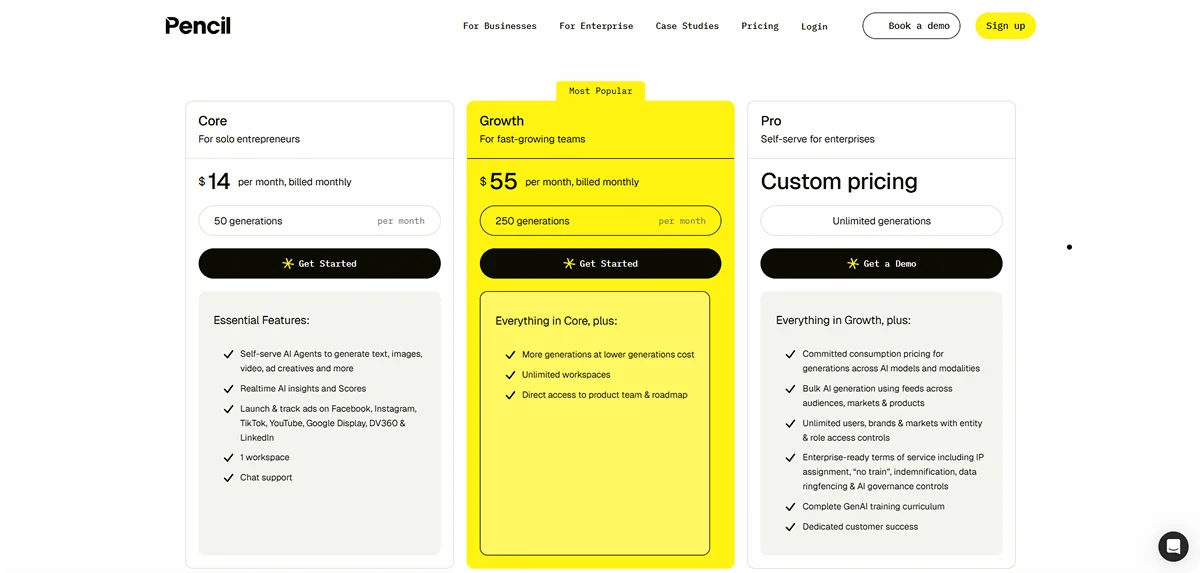
Solara sits in that division of labour on the production side — $29 a month per business, it writes the script, texts the client to film about two minutes on their phone, then cuts, captions and publishes across Instagram, Facebook and TikTok, with approval before anything goes live. Your client is on camera. You keep the judgement, and the margin.
The clients who leave will be the ones who wanted a person to be personally exhausted on their behalf. There are fewer of those than you think.
Sources
- 1.Freelance Social Media Manager Rates in 2026 — SolidGigs
- 2.How Much to Charge for Social Media Management — Whatagraph
- 3.Social Media Agentur Preise und Kosten — Überblick 2026 — AgenturFinder
Prices and figures were read from the sources above in September 2026. Published rates change; check the original before relying on a number.